
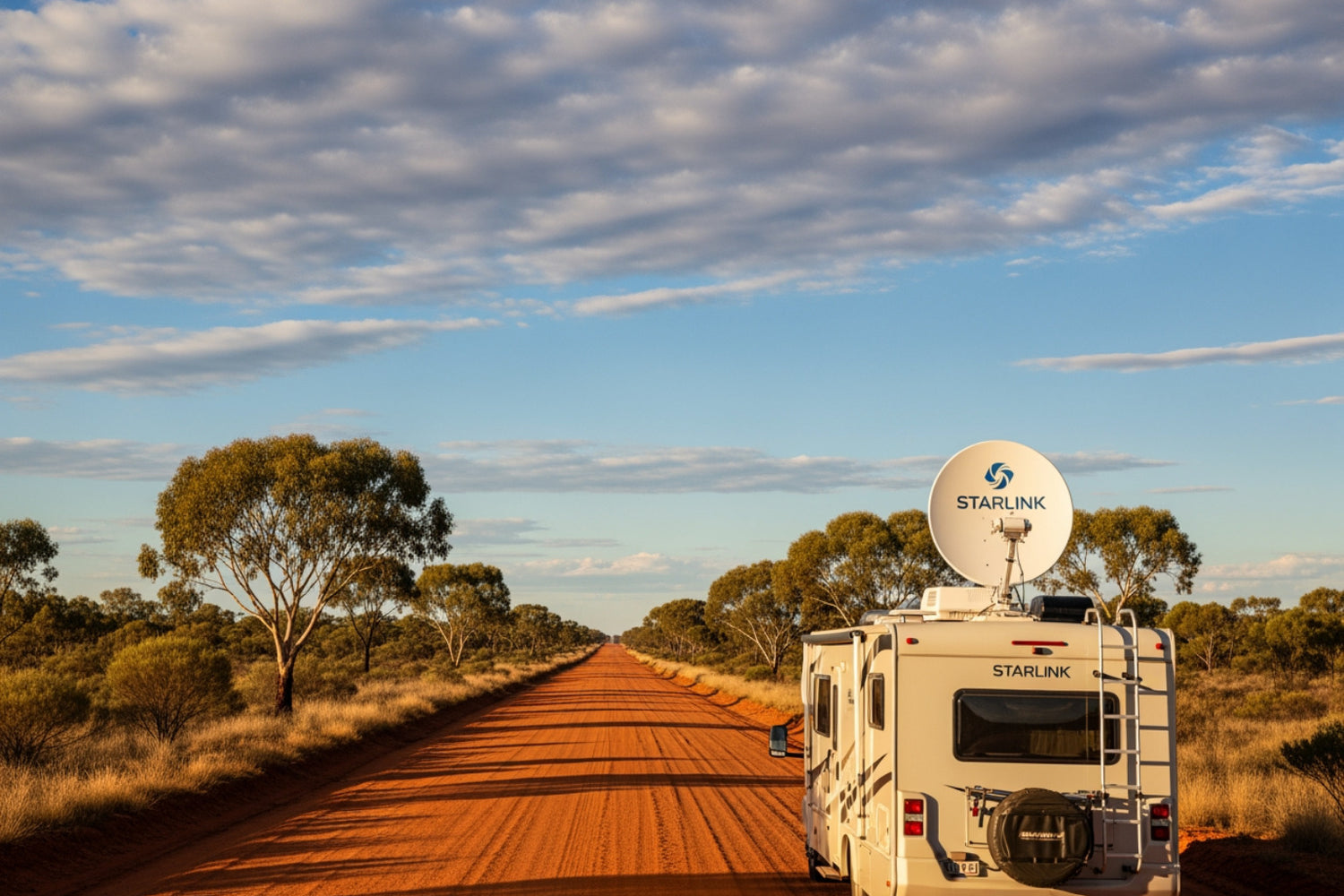
Why Getting Your RV Satellite Internet Setup Right Matters From the Start
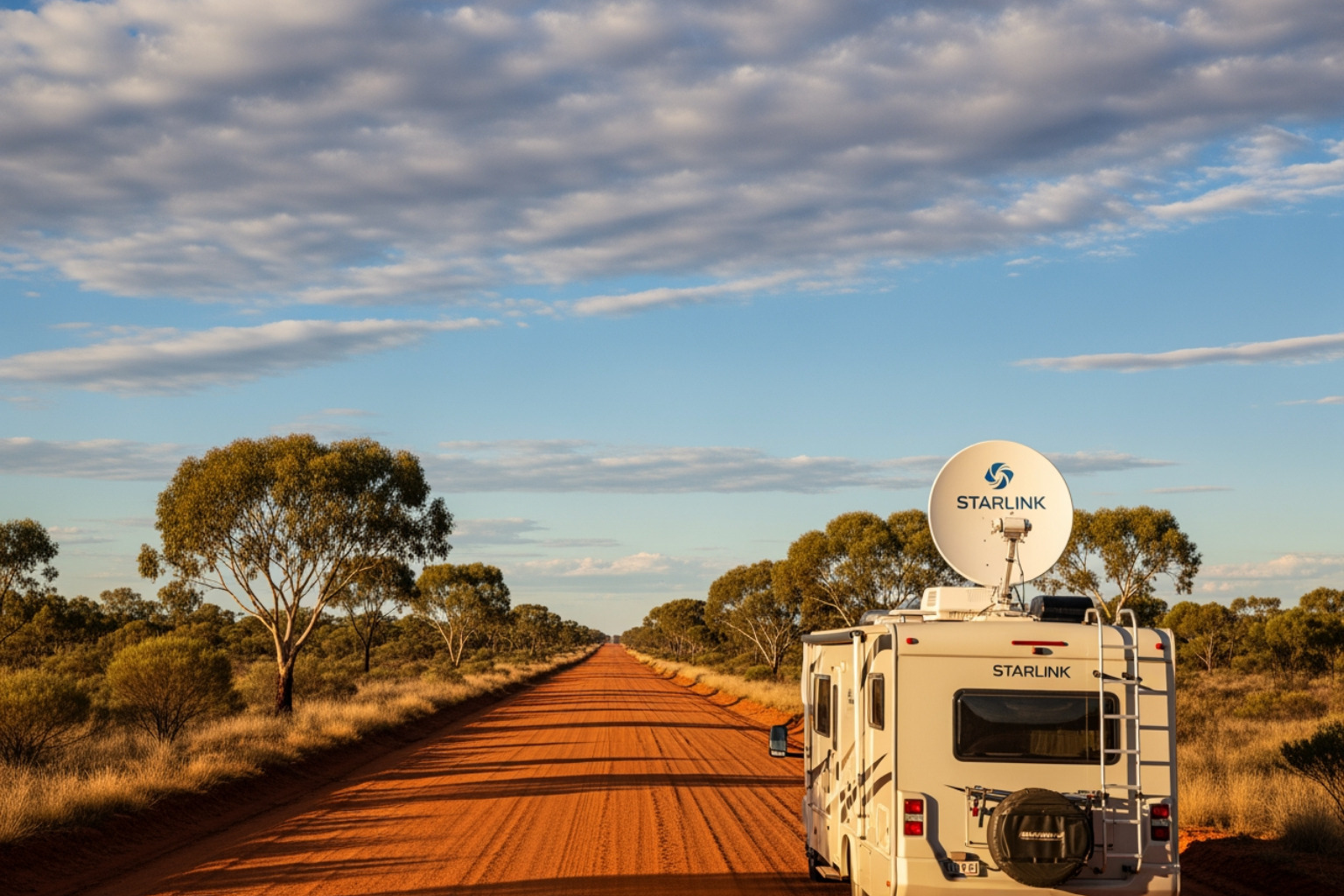
RV satellite internet setup done properly means reliable, high-speed connectivity wherever the road takes you — not just in town.
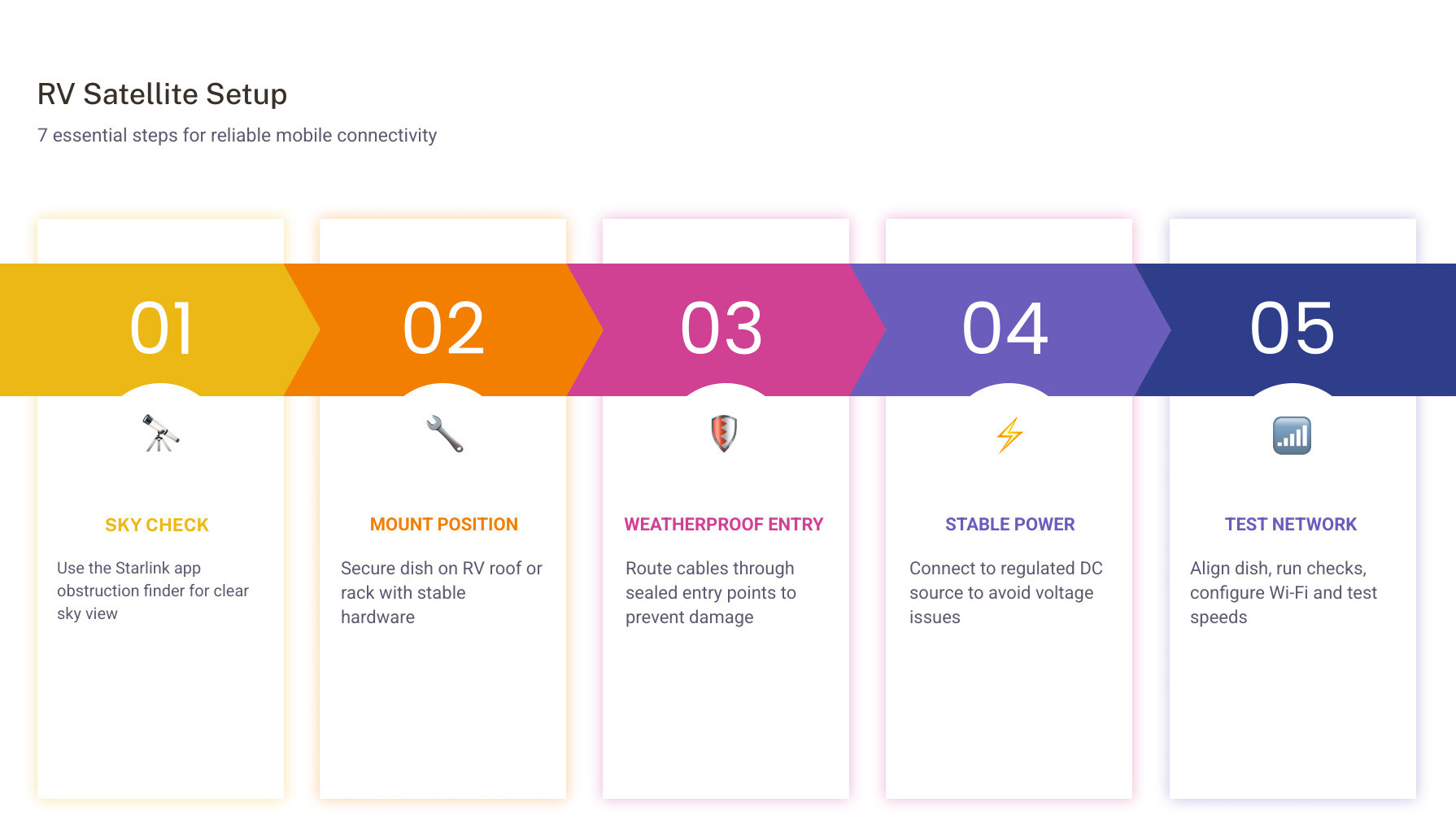
Here is a quick overview of the 7-step process:
- Check for a clear sky view using the Starlink app's obstruction finder
- Choose a secure mounting position on your RV roof or rack
- Install a purpose-built Starlink mount with stainless steel hardware
- Route the cable through a sealed, weatherproof entry point
- Connect to a stable, regulated DC power source
- Align the dish and run obstruction checks via the Starlink app
- Configure your Wi-Fi network and test your connection
The open road promises freedom. But for remote workers, families, and off-grid adventurers, staying connected is no longer optional.
Whether you need to send emails from a dusty outback campsite or stream after a long day on corrugated tracks, the right satellite setup makes it possible.
Starlink has changed the game for New Zealand travellers. Its low-Earth orbit (LEO) network delivers speeds that older geostationary systems simply cannot match — with latency typically under 100ms and download speeds ranging from 50 to 200+ Mbps depending on conditions.
But the dish is only part of the story.
How you mount, power, and protect that dish determines whether your system lasts a weekend or years of hard travel. New Zealand's UV exposure, salt air, and corrugated outback roads are brutal on poorly installed hardware.
That is where most RV satellite setups fall short — not in the technology, but in the infrastructure supporting it.
This guide walks you through every step of a proper installation, including the mounting and power decisions that separate a reliable long-haul setup from one that fails at the worst possible moment.
Choosing the Right Starlink Mount and Accessories for Your Setup
A successful RV satellite internet setup requires hardware that balances high-speed data needs with the physical constraints of mobile travel. Choosing the right infrastructure ensures your connection remains stable whether you are streaming in a caravan park or working from a remote station.
When we look at the landscape in May 2026, the options for mobile connectivity have matured. While cellular 5G networks are excellent in populated areas, they still only cover about 70% of New Zealand's landmass. For the true adventurer, Starlink RV Integration 2026 is the gold standard because it bypasses ground-based towers entirely. Before you dive in, consider your data needs—streaming HD video can chew through 3GB per hour, while Zoom calls can consume up to 2.4GB per hour. Your budget and travel locations will dictate whether you need a basic portable kit or a heavy-duty vehicle mounting solution.
Residential vs Commercial Hardware
Standard dishes are the most common entry point, but for those who need to stay connected while moving between campsites, the Flat High Performance hardware is designed specifically for in-motion use. While hardware costs are an upfront investment, the reliability of a commercial-grade signal often outweighs the risk of data deprioritisation seen on cheaper, address-locked residential plans.
Permanent vs Portable RV Satellite Internet Setup
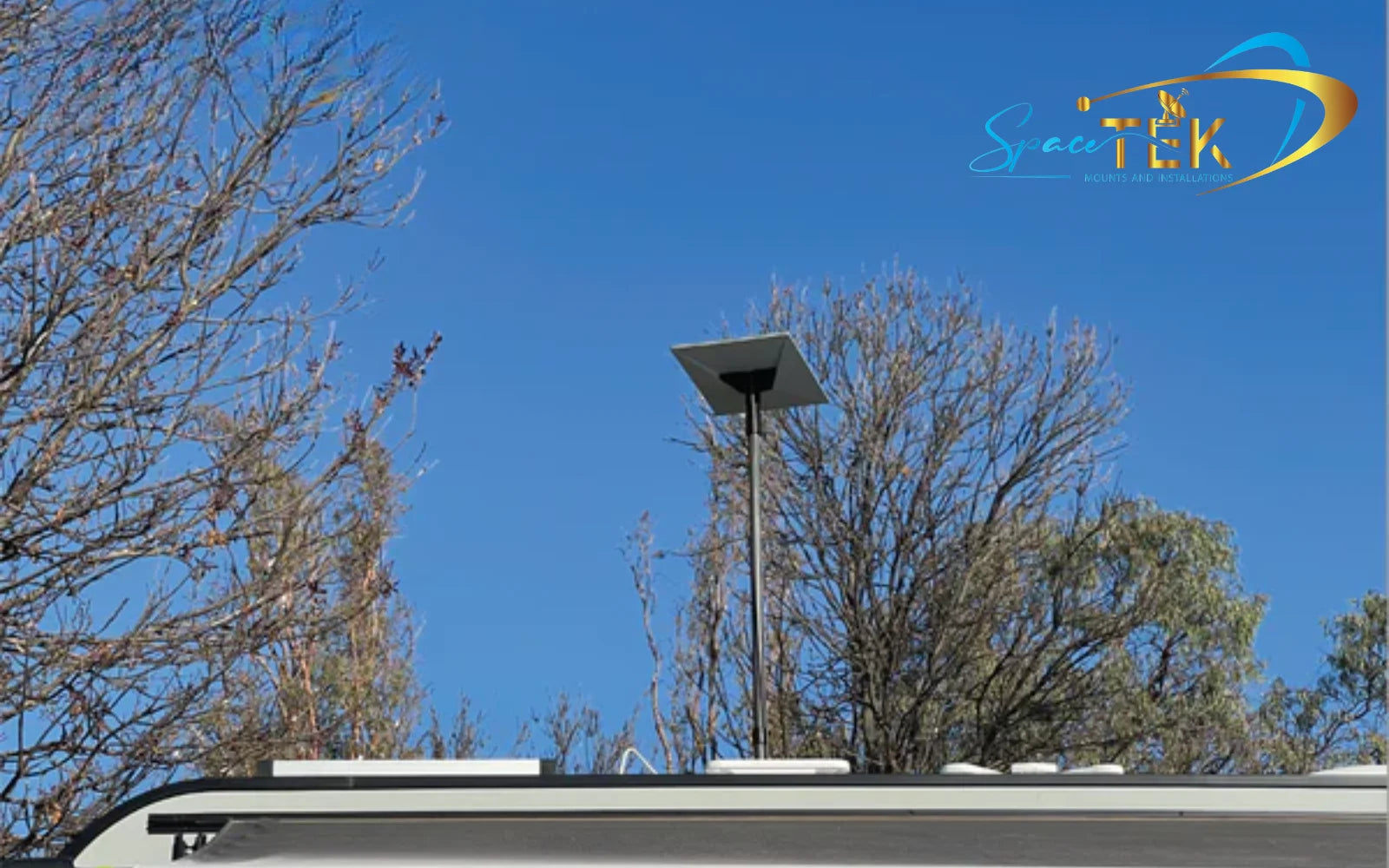
The debate between permanent roof mounts and portable tripod systems usually comes down to where you park. A Starlink RV Mounting Guide will show you that roof mounts offer the ultimate convenience—no setup time required. However, if you love camping under the shade of a ghost gum, a portable system gives you the flexibility to move the dish to a clear patch of sky while your RV stays cool. Many of our customers opt for a hybrid approach, using a roof mount for 90% of stops and keeping a portable base for those tricky, obstructed sites.
Why Quality Starlink Infrastructure Matters in New Zealand Conditions
New Zealand travel conditions are notoriously harsh. If you’ve ever driven the Oodnadatta Track or spent a summer on the Ningaloo Coast, you know that heat, dust, and vibration are the enemies of electronics. High-quality infrastructure is essential to prevent hardware failure and ensure your RV satellite internet setup survives the journey.
Standard mounts often use plastics that become brittle under intense UV exposure. At SpaceTek, we prioritise aluminium construction and stainless steel fasteners to combat salt air corrosion and the relentless vibration of corrugated roads. Furthermore, standard RV 12V systems are prone to voltage fluctuations. A stable, regulated DC power supply is critical; without it, your Starlink dish may reboot every time your fridge compressor kicks in. Do it properly the first time, and you won't be troubleshooting in the middle of the desert.
Our Range: SpaceTek Starlink Solutions for Every Setup
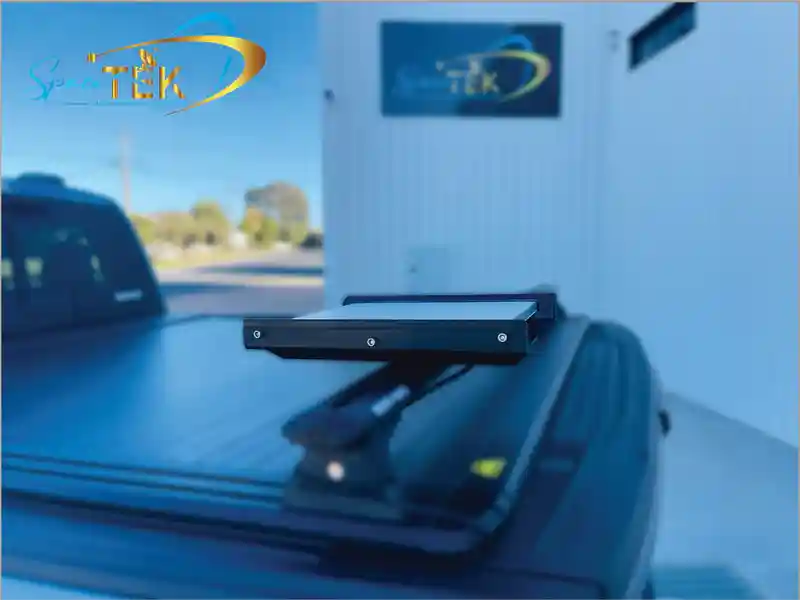
Selecting purpose-built mounting and power gear is the only way to ensure off-grid readiness. Our range is engineered to integrate seamlessly with your vehicle while providing the structural integrity required for high-performance touring and emergency communication. We understand that Starlink Mini Mounts for Australians need to be as rugged as the vehicles they are attached to.
Starlink Mini and Gen 3 Integration
The Starlink Mini has become a favourite for its compact design and low power draw. To integrate these systems effectively, we offer:
- Custom pipe adapters for elevated mounting.
- Low-profile roof brackets that reduce wind drag.
- Quick-release kits for users who want to switch between vehicle and ground use.
- Protective cases designed for the Gen 3 kickstand removal process.
Optimising Your RV Satellite Internet Setup for Remote Travel
Signal stability is the goal. Use the Starlink app's obstruction finder to ensure you have a clear 100-degree arc of the sky. We recommend regular firmware updates to keep your system efficient and enabling WPA3 encryption for better network security in crowded campgrounds. Proper cable management—using UV-rated conduits and weatherproof glands—prevents the "spaghetti" of wires that leads to snags and damage.
StarPower and Advanced DC Power Solutions
A reliable RV satellite internet setup depends on a stable, regulated DC power supply to avoid the dropouts caused by standard 12V battery fluctuations. Using dedicated power solutions eliminates the need for inefficient inverters, which can waste up to 20% of your battery capacity just converting DC to AC and back again.
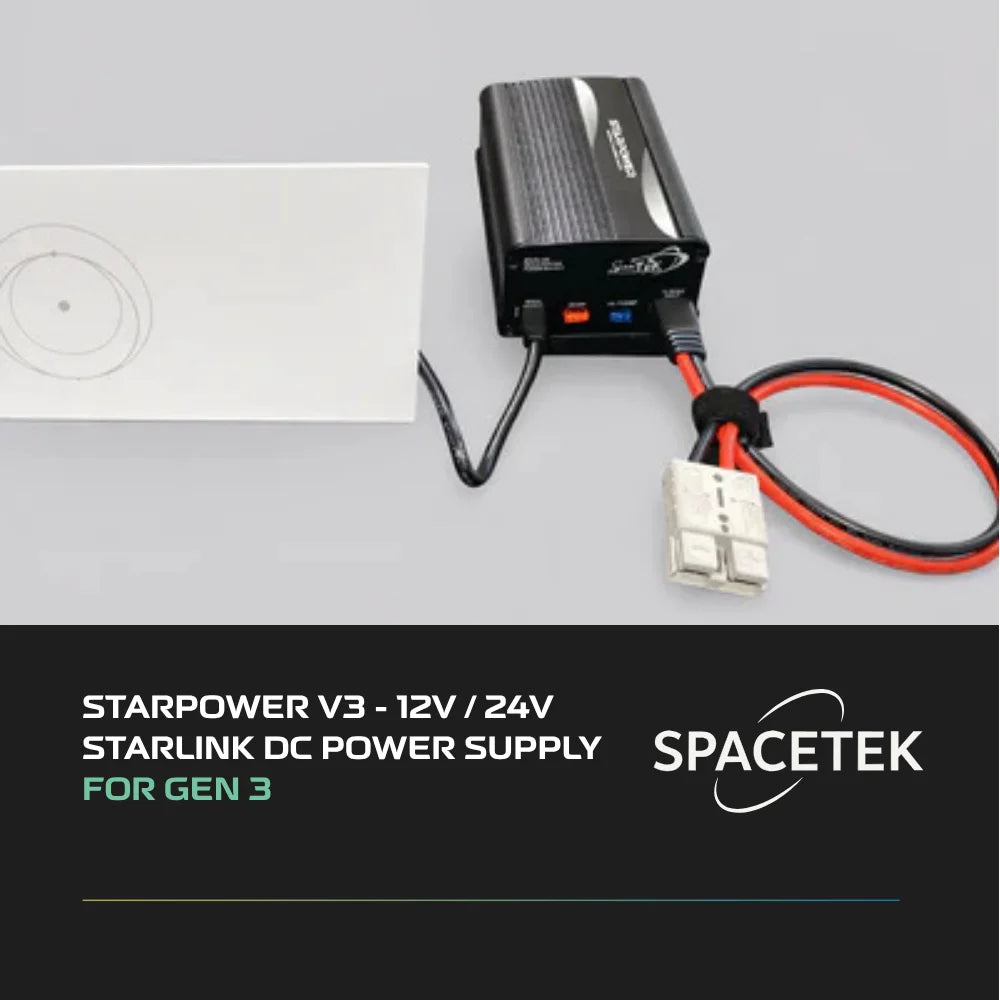
Our Ultimate Power Solution for Starlink (the StarPower V4) and the 12V/24V DC Power Supply (V3) are designed for lithium battery compatibility and solar integration. These units provide a clean, consistent feed to your dish. The Starlink Mini, for instance, is incredibly efficient, drawing only 20-40W during use and dropping to 15W when idle. By running directly on DC, you maximise your off-grid endurance.
Essential Features to Look for in Starlink Kits
The best Starlink kits for mobile use prioritise weather resistance and infrastructure independence. You want to be able to maintain a connection without relying on patchy campground Wi-Fi or cellular towers that disappear as soon as you turn off the highway.
- Weatherproofing: Ensure all external connections are sealed with marine-grade sealant.
- Cable Entry: Use high-quality cable entry glands to prevent water ingress into your RV roof.
- Thermal Management: Look for mounts that allow airflow around the dish to prevent overheating in 40°C+ New Zealand summers.
- Bypass Mode: If using a high-end travel router, ensure your Starlink can be set to bypass mode for better network control.

Common RV Satellite Internet Setup and Power Mistakes to Avoid
Most connectivity issues on the road stem from poor installation choices. It’s easy to get excited and rush the job, but avoiding these common pitfalls will save you a headache later.
- Sky Obstructions: Even a single overhanging branch can cause a "searching" loop.
- Poor Cable Routing: Never leave cables loose where they can flap in the wind or get crushed by a closing door.
- Voltage Instability: Using a "ciggy plug" for a high-draw Gen 3 dish often results in voltage drops and reboots.
- Non-Rated Hardware: Cheap hardware will rust within months in coastal areas or rattle loose on corrugated roads.
- Improper Grounding: Ensure your power system is correctly grounded to protect against static build-up in dry, dusty conditions.

Frequently Asked Questions About Starlink Mounts and Power
Can I use Starlink while driving?
In-motion use is supported on specific Mobile Priority plans when using flat-mounted hardware. The dish must be mounted horizontally and securely to handle wind resistance at highway speeds. Standard actuated (Gen 2) dishes should not be used while driving as the motors are not designed for those wind loads.
How much power does the system consume?
A standard setup typically draws between 25W and 75W. The Starlink Mini is the efficiency king, often drawing as little as 20W during active use. Using a DC-DC converter from SpaceTek ensures you aren't wasting extra power through an inverter.
Does weather affect the satellite signal?
While heavy rain or thick cloud cover can cause minor speed fluctuations, a properly mounted dish with a clear sky view will maintain a stable connection in most conditions. Starlink dishes even have a built-in "snow melt" heater, though in New Zealand, you're more likely to use it to clear heavy dew or frost!
Is it hard to set up the Starlink Mini?
Not at all. The Mini integrates the router into the dish itself, making it a single-cable setup. When paired with a SpaceTek mount, the physical installation is rock-solid and takes minutes to deploy at camp.
Built for the Outback, Powered for Reliability
Investing in a high-quality RV satellite internet setup means you can explore further without losing touch with the world.
By prioritising stable power and robust mounting, you ensure your connection is as durable as your vehicle. Whether you are a digital nomad working from the Red Centre or a family keeping in touch with home from the coast, doing it right the first time is the key to stress-free travel.
SpaceTek New Zealand provides the specialised infrastructure needed to keep you online across the toughest New Zealand tracks. From the precision of our aluminium mounts to the efficiency of our StarPower DC solutions, we build gear for people who actually use it. Install it right the first time and enjoy the freedom of the long road. For those looking for even more robust options, explore our commercial solutions designed for the most demanding environments.

Leave a comment
This site is protected by hCaptcha and the hCaptcha Privacy Policy and Terms of Service apply.