
What Are Fixed Mounts for Starlink — and Which One Do You Need?

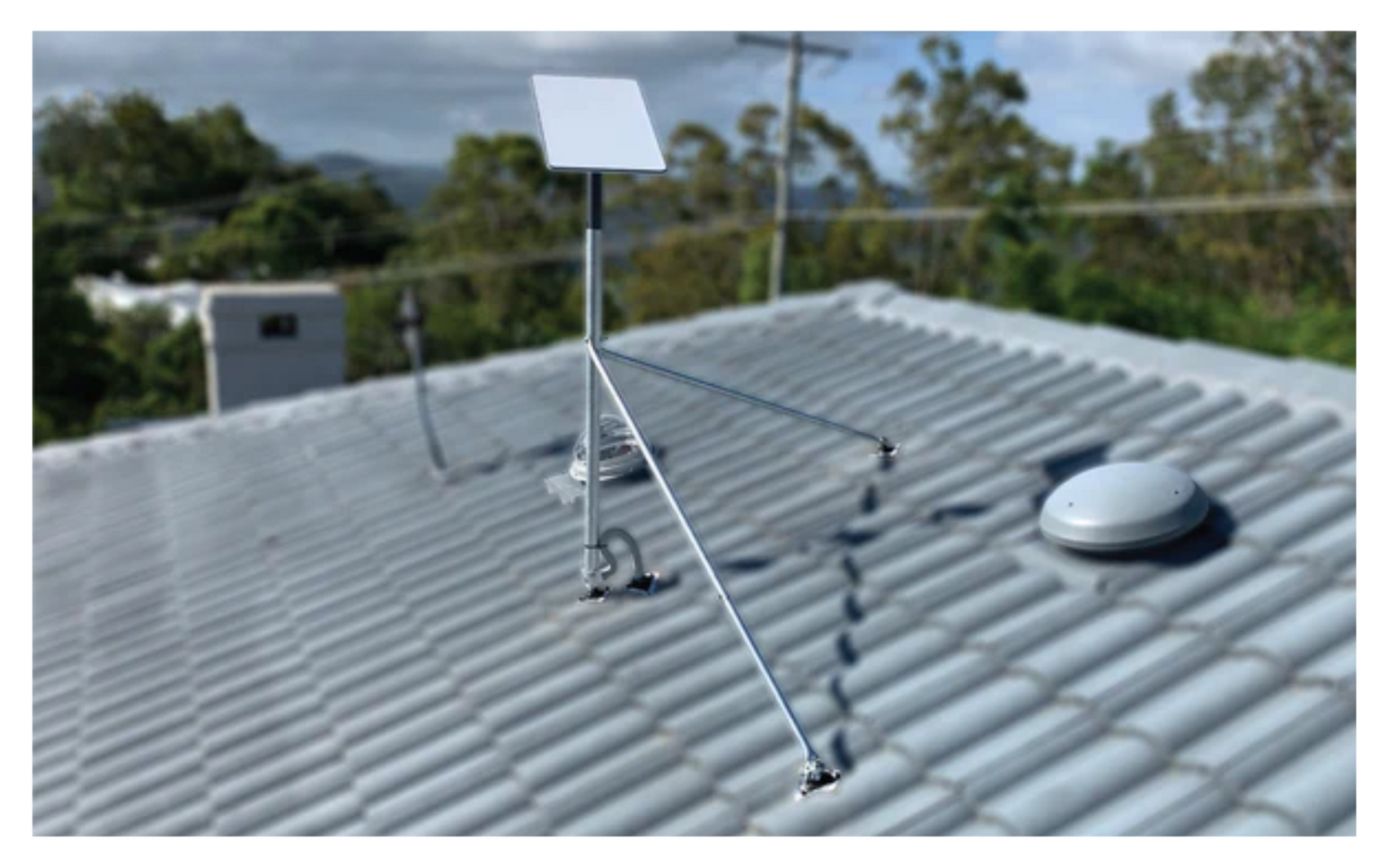
Fixed mounts for Starlink are permanent hardware solutions that bolt your satellite dish securely to a roof, wall, pole, or other structure.
Unlike portable setups, SpaceTek's precision-formed mounts stay put through storms, high winds, and years of harsh weather.
Here's a quick overview of the main SpaceTek fixed mount types:
- Wall mount — precision-formed for exterior walls or fascia; suits homes with limited roof access; max 4-inch overhang
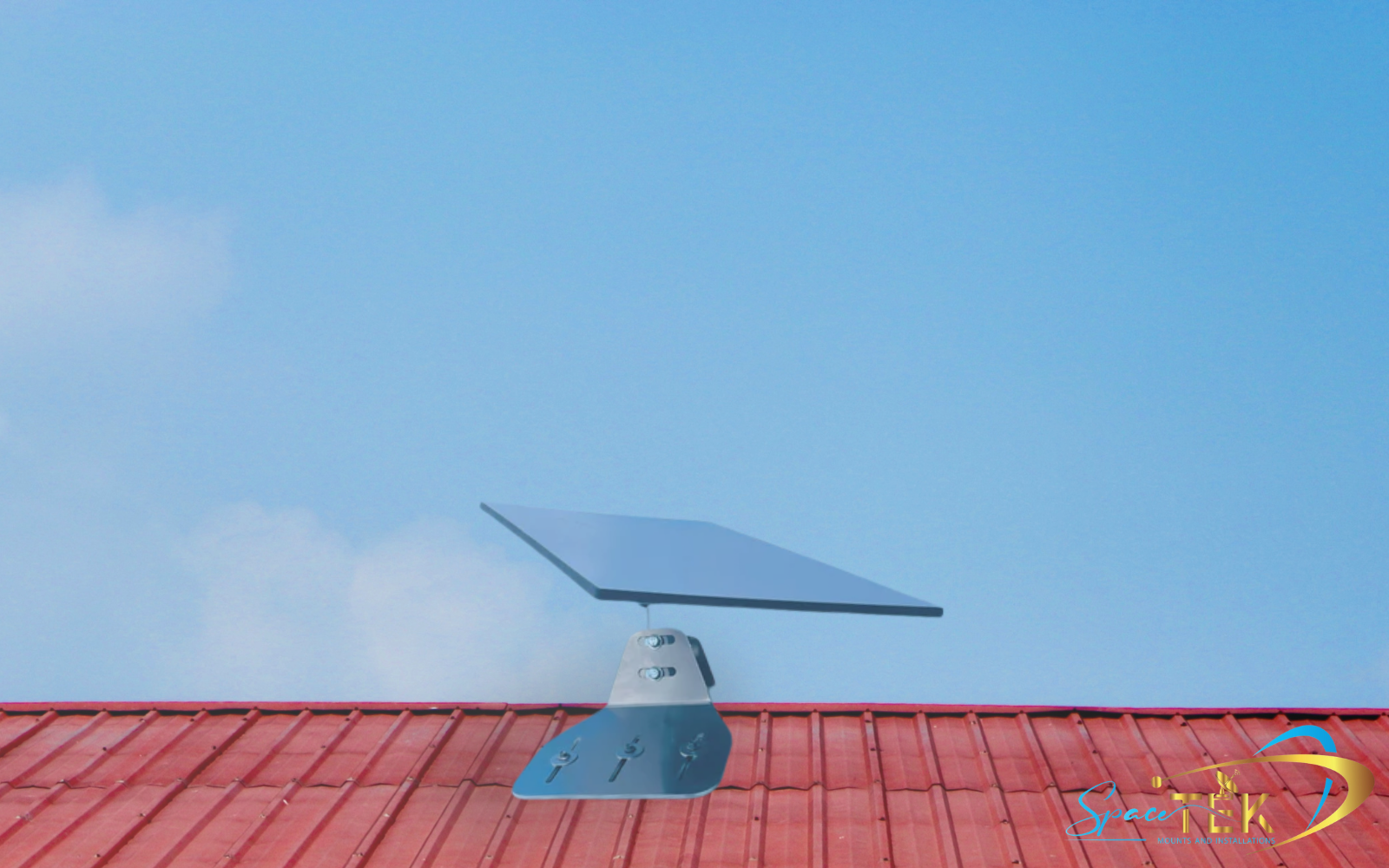
- Roof/pivot mount — precision-machined to bolt directly to a pitched or flat roof; allows tilt and angle adjustment
- Pole/pipe adapter — engineered to clamp to a metal pole (typically 31–63.5 mm diameter) for elevated, open-sky positioning
- Ridgeline mount — sits on a roof ridge using ballast weights; no drilling required; rated to 80 kph winds
- Flat mount — ultra-low-profile design for vehicles, boats, or flat roof surfaces; some rated to 280 km/h sustained winds
- Custom pole mount kits — featuring 1.5kg lightweight carbon fibre poles engineered for specific structures like RVs or rural properties
Which one is right for you? It depends on your Starlink dish generation (Gen 2, Gen 3/V4, Mini, or Performance), your surface type, and how much wind and weather your location gets.
For most New Zealand homeowners and rural properties, a SpaceTek roof pole mount or wall mount made from aluminium or stainless steel is the most reliable long-term solution.
Your Starlink dish is only as good as what's holding it up. A poorly chosen mount can mean dropped connections and buffering; ensuring physical mount stability is the primary fix for signal reliability issues. This matters a great deal if you're relying on satellite internet for work or daily life in a remote area.
SpaceTek New Zealand offers a complete range of fixed mounts and accessories engineered specifically for New Zealand conditions — from coastal salt spray to outback UV exposure and cyclonic winds.
Selecting the Right Fixed Mounts for Starlink

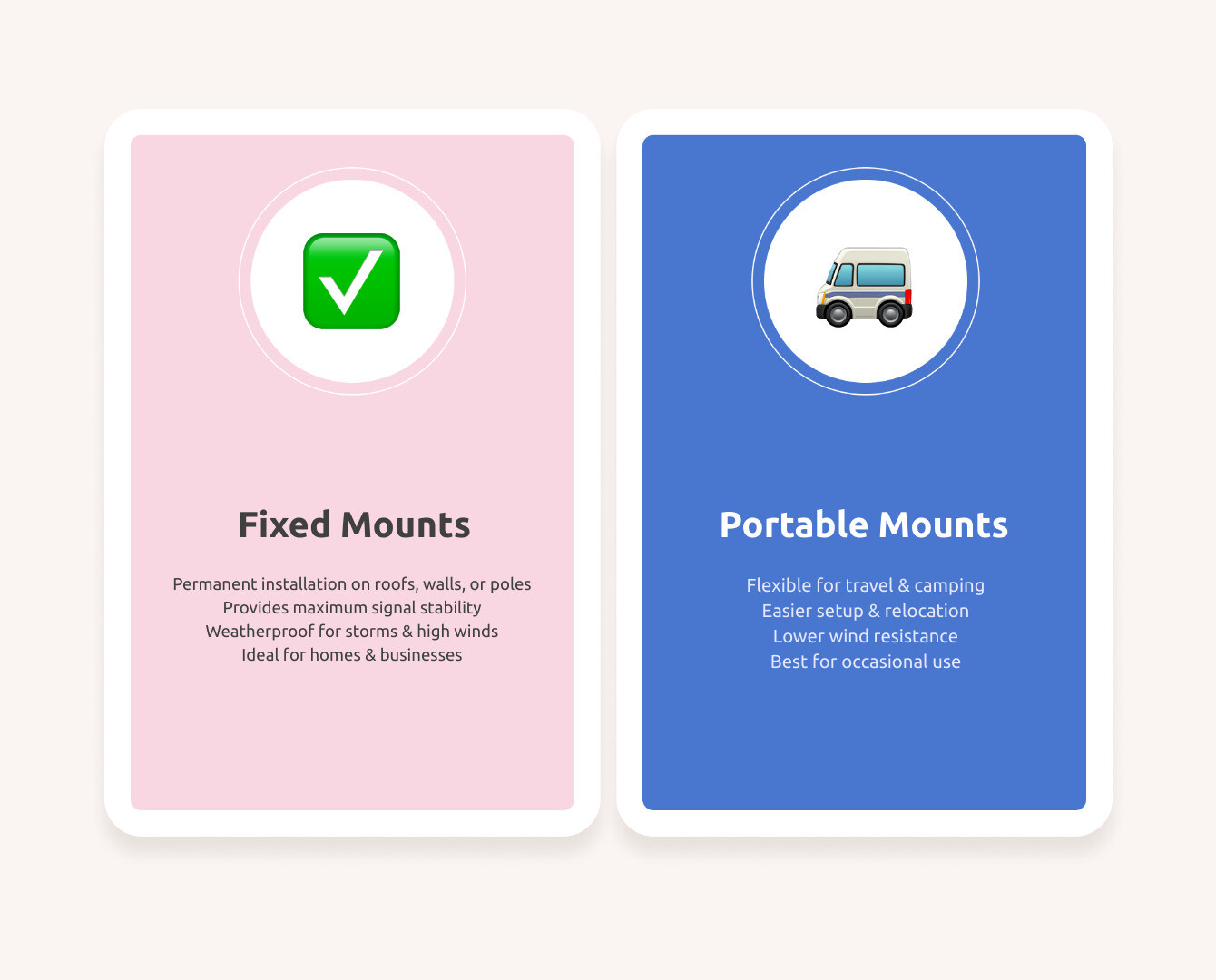
Choosing the right hardware is about more than just finding a flat surface. A permanent installation requires a deep dive into signal reliability, structural integrity, and long-term weatherproofing. While portable mounts offer flexibility for the occasional weekend camper, fixed mounts for Starlink provide the rock-solid foundation needed for stationary homes, rural properties, and businesses.
When we look at structural integrity, we aren't just talking about keeping the dish from falling off. We are talking about maintaining a precise "bore-sight" to the satellite constellation. Even a few degrees of wobble in high winds can cause "micro-outages"—those annoying three-second drops that ruin Zoom calls or online gaming. By using a SpaceTek fixed solution, you eliminate the vibration and movement that plague tripod-style setups.
Types of Fixed Mounts for Starlink and Their Applications
The architecture of your building usually dictates your mounting choice. If you have a clear view of the southern sky (in the Southern Hemisphere) from your gutter line, wall, eave, or pole mounts are excellent choices.
- Wall and Fascia Mounts: These are ideal for houses with significant roof overhangs. A standard SpaceTek wall mount can typically handle up to a 4-inch overhang, providing enough clearance for the dish to tilt without hitting the gutter.
- Pivot Mounts: These are the "Swiss Army Knives" of the mounting world. With a 90-degree swivel capability, they can be adjusted to match the pitch of almost any shingled or metal roof, ensuring the dish remains level.
- Ridgeline Mounts: For those who cannot or do not want to drill into their roof—such as renters or owners of premium metal roofing—the SpaceTek ridgeline mount uses ballast weights (roughly 25 kg) to stay secure. It’s a "fixed" solution that doesn't leave a permanent mark.
- Mobility and Flat Mounts: For those mounting to a roof rack or a flat-topped vehicle, understanding everything you need to know about Starlink Gen 3 roof rack mobility mounts is essential. These mounts often feature an 8-degree tilt to help shed water while maintaining a low profile.
Material Durability for Harsh New Zealand Climates
In New Zealand, the environment is a mount's worst enemy. Between the blistering UV radiation in the Red Centre and the salt spray along the Gold Coast, standard steel mounts will rust and fail within years. At SpaceTek, we focus on high-quality materials like 316L stainless steel and marine-grade aluminium.
Aluminium is particularly valued for its weight-to-strength ratio and natural corrosion resistance. Unlike 3D-printed plastics that become brittle under the New Zealand sun, our precision-machined aluminium base plates are built to last decades. Research into marine-grade aluminium alloys confirms that these materials form a protective oxide layer that prevents deep structural corrosion, making them the gold standard for heavy-duty Starlink installations in New Zealand.
Compatibility Across Starlink Generations
Not all Starlink dishes are created equal, and neither are their mounts.
- Gen 2 (Standard Actuated): Features a motor and a specific mast diameter. It requires a SpaceTek adapter if you're moving it to a standard pole.
- Gen 3 / V4 (Standard): This is the newer, non-actuated (kickstand) version. It is larger and heavier (3.2 kg) than the Mini, requiring more robust mounting points.
- Starlink Mini: The portable powerhouse. While it fits in a backpack, it often needs a fixed home on a caravan or boat. For specific advice on this model, refer to our Starlink Mini mounting bracket New Zealand guide.
- High Performance: Designed for enterprise use, these dishes are larger and require SpaceTek mounts with higher wind load capacities.
Installation Standards and the SpaceTek Advantage
Installing fixed mounts for Starlink isn't just a "set and forget" task; it requires adhering to safety protocols to ensure the dish doesn't become a projectile in a storm. High-quality installations prioritize wind ratings and signal acquisition. For instance, the SpaceTek Performance Flat Mount is rated to withstand sustained winds of up to 280 km/h, which is essential for cyclonic regions.
Key Features of High-Performance Fixed Mounts for Starlink
When shopping for a mount, look for these "non-negotiable" features:
- Wind Load Ratings: If a mount doesn't specify its wind rating, be cautious. SpaceTek professional mounts handle at least 80 kph for non-drilled setups and much higher for bolted versions.
- Cable Management: High-performance mounts include routing paths that protect the cable from being pinched or exposed to sharp edges.
- Optimised Tilt: While the Gen 3 dish is "self-orienting" in terms of software, a physical tilt (like the 8-degree angle found in many SpaceTek mobility mounts) helps prevent water pooling on the face of the dish, which can degrade signal.
- Precision Fit: A mount should hold the dish snugly. Any "play" or "wobble" in the bracket will lead to wear and tear on the dish's plastic housing over time. For a full safety rundown, check out the ultimate checklist for installing your Starlink mount safely.
Essential Accessories for Permanent Installations
A mount is only part of the equation. To complete a professional-grade setup, you need the right accessories:
- Pipe Adapters: If you are mounting to an existing antenna mast, you will need a SpaceTek pipe adapter. These typically fit metal poles between 31mm and 63.5mm. You can find more on this in our guide to using a pole adapter for your Starlink dish.
- Cable Glands: These are critical for weatherproofing. They allow the Starlink cable to enter your home or vehicle through a sealed, waterproof port.
- Stainless Fasteners: We always recommend 304 or 316 stainless steel bolts and lag screws. Zinc-plated hardware will eventually streak your roof with rust.
- Power Supplies: For off-grid users, SpaceTek DC-DC power supplies provide a stable 57V output for Gen 3 and 35V for Mini boosters, allowing you to run your Starlink directly from your battery bank without the inefficiency of an inverter.
Why Professional-Grade Hardware Defines Connectivity
At SpaceTek New Zealand, we don't believe in "one size fits all." We understand that a mount designed for a calm backyard in California might not survive a summer storm in Cairns or a dusty trek across the Nullarbor.
Our advantage lies in our engineering. We use custom aluminium base plates and high-strength carbon fibre poles that weigh only 1.5kg yet are incredibly stiff. By using precision-machined or formed components—avoiding 3D-printed parts which can fail under high heat—we ensure that your connection stays live when you need it most.
If you're experiencing connectivity issues, physical mount stability is the primary fix to investigate. If you're not comfortable climbing a ladder or drilling into your roof, we always recommend professional help. You can use our find an installer tool to connect with experts who know exactly how to handle SpaceTek gear. And if you're still torn between a permanent home setup and a mobile one, our guide on portable Starlink mounts can help you weigh the pros and cons.
FAQ: Common Questions About Fixed Starlink Mounts
Can I use the mount that came in the box for a permanent install?
The "X-frame" base included with most Starlink kits is designed for ground-level testing and temporary use. It is not rated for high winds on a roof and does not provide the elevation needed to clear obstructions. For a permanent setup, a dedicated SpaceTek roof or wall mount is essential, as physical mount stability is the primary fix for preventing signal drops.
Does mounting the dish flat affect my speeds?
For the Starlink Mini and Gen 3 (V4), flat mounting is common and highly effective. While a slight tilt (8-20 degrees) is often recommended to help with rain run-off, modern Starlink software is excellent at managing signal acquisition even when the dish is mounted horizontally using a SpaceTek flat mount.
Will a third-party mount void my Starlink warranty?
Using a high-quality external mount like those from SpaceTek does not void your warranty, as they are precision-machined to work with the dish's existing mounting points. However, "hacker" mounts that require you to cut the plastic housing of the dish (often called "flat mounting" a Gen 2 dish) will almost certainly void your warranty.
What is the best material for a mount near the ocean?
If you live within 5km of the coast, 316L stainless steel or marine-grade aluminium is a must. Standard steel or cheap alloys will corrode rapidly due to the salt air, potentially leading to mount failure. SpaceTek components are specifically chosen for these environments.
Secure Your Signal with SpaceTek
Reliable satellite internet is a game-changer for Australians living and working in regional areas, but the dish is only half of the story. Without a stable, durable, and correctly positioned mount, you are leaving your connectivity to chance.
Fixed mounts for Starlink offer the peace of mind that comes with knowing your hardware is secure, whether you're facing a tropical downpour or a heatwave. By choosing SpaceTek’s New Zealand-engineered solutions, you're investing in hardware that is built for our unique climate—using rust-resistant aluminium, stainless steel, and precision machining rather than fragile 3D prints.
From custom pole kits for rural properties featuring 1.5kg carbon fibre poles to low-profile mobility mounts for the modern nomad, we provide the complete ecosystem of mounts, cables, and power accessories needed to keep you online.
Ready to elevate your setup? Explore our full range of Starlink mounts and accessories or contact our experts to find the perfect fit for your property today.


Leave a comment
This site is protected by hCaptcha and the hCaptcha Privacy Policy and Terms of Service apply.