

Why Your Starlink Deserves More Than the Box Mount
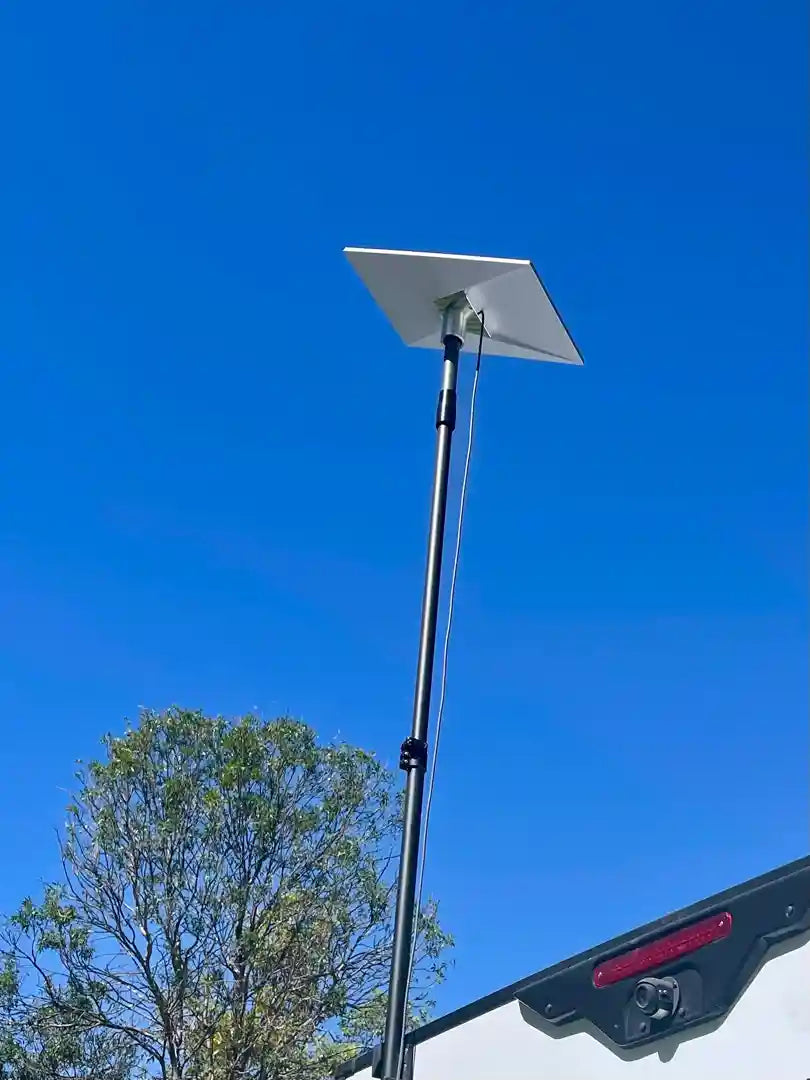
A Starlink roof mount bracket is essential for securing your dish above obstructions and ensuring reliable signal performance especially in rural and remote areas where connectivity matters most.
Quick Guide to Starlink Roof Mount Brackets:
- Pitched Roofs: Use a Pivot Mount for angle adjustment or a Ridgeline Mount for no-drilling installation
- Australian Roof Types: Choose specialised mounts for tin, tile, and corrugated roofs
- Compatibility: Match your mount to your dish generationGen 2, Gen 3, or Starlink Mini
- Materials: Look for galvanised steel or aluminium construction for rust resistance
- Installation: Most mounts include all hardware and can be self-installed with basic tools
The standard mount that comes with your Starlink is designed for temporary ground-level testingnot permanent installation. It's vulnerable to obstructions like trees, buildings, and even wandering livestock. Ground-level placement often means compromised signal quality and frustrating dropouts during video calls or streaming.
If you are curious how Starlink itself works, there is a helpful overview on satellite internet that explains why height and clear sky view matter so much for performance.
Mounting your dish on the roof solves these problems. You get an unobstructed view of the sky, better signal stability, and protection from accidental damage. A proper Starlink roof mount kit also means your dish can withstand Australia's harsh weatherfrom coastal salt spray to inland windstorms.
But not all roof mounts are created equal. The wrong bracket can leak, rust, or fail when you need connectivity most. Choosing the right Starlink roof mount bracket means matching your specific roof type, dish generation, and environmental conditions.
I'm Aaron Wroblewski, founder of SpaceTek Australia, and I've spent over 25 years helping Australians get connected in challenging locations. I created SpaceTek specifically to address the gap in durable, user-friendly Starlink roof mount brackets designed for Australian conditionsfrom remote stations to coastal homes.
Starlink roof mount bracket definitions:
- Mounting Starlink on Tile, Tin, and Corrugated Roofs: A Field Test
- Starlink for Coastal Homes: Mounting Challenges by the Sea
Your Ultimate Guide to the Best Starlink Roof Mount Bracket Options
When it comes to elevating your Starlink experience, a dedicated Starlink roof mount bracket is a game-changer. Unlike the temporary base that comes with your Starlink kit, a purpose-built roof mount offers superior benefits, ensuring your internet connection is as robust as possible.
Primarily, a dedicated roof mount provides an optimal, unobstructed view of the sky, which is critical for maintaining a consistent signal from Starlink's satellites. Any obstructions, even small ones, can cause frustrating service interruptions. By placing your dish high on the roof, you minimise this risk significantly.
Beyond clear line-of-sight, a quality roof mount contributes immensely to signal stability and performance, especially when facing adverse weather conditions. Mounts engineered with heavy-gauge, corrosion-resistant materials can withstand high winds and heavy rain, preventing dish movement that could lead to signal drops. For instance, while some standard mounts may only be rated for moderate winds, specialist mounts are engineered to endure much higher wind speeds, ensuring your connection stays strong even when the weather isn't. This stability is paramount in Australia's diverse and often extreme climate.
For Pitched & Slanted Roofs: Pivot and Ridgeline Mounts
Pitched and slanted roofs present unique challenges for Starlink installation, but specialised mounts are designed to tackle them head-on.
Pivot Mounts are our go-to solution for shingled and other slanted roofs. These mounts are specifically engineered to ensure your Starlink dish remains perfectly vertical, regardless of your roof's angle. This is crucial for the dish's internal motors to function correctly and maintain optimal satellite tracking. Our pivot mounts, for example, come with mastic tape and lag screws, helping you create a robust, weatherproof seal that protects your roof from water ingress while securing your dish. You can learn more about these versatile mounts in our definitive guide to the best Starlink Pivot Mounts.
Ridgeline Mounts offer a fantastic alternative for those who prefer a non-penetrating installation. Designed for most rooftops and flat surfaces, these mounts sit securely on the roof's ridgeline without requiring any drilling. They typically use ballast weights to provide stability, making them an excellent choice for gable roofs. While incredibly convenient, it's important to check the wind rating of any ridgeline mount, as some are not suitable for high-wind areas, steep slopes exceeding 45 degrees, or for use on clay tile roofs. For detailed instructions, check out our SpaceTek Ridgeline Mount Installation Guide.
Solutions for Australian Roofs: Tin, Tile, and Corrugated
Australia's architectural landscape often features distinctive roofing materials like tin, tile, and corrugated iron. Each presents its own set of considerations for mounting your Starlink dish.

We understand these unique challenges. That's why our custom Starlink mounting kits are specifically designed for Australian conditions, providing secure solutions that respect your roof's integrity. Weatherproofing is paramount when dealing with roof penetrations. Our kits often include comprehensive weatherproofing solutions and sealants to ensure a watertight installation, preventing leaks and structural damage. You can dive deeper into the specifics in our article on mounting Starlink on tile, tin, and corrugated roofs.
Here's a list of specialised mounts custom for various Australian roof types:
- Tin Roof Mounts: Engineered for the unique profiles of tin and corrugated iron roofs, providing secure attachment points without compromising the roof's structural integrity or weather resistance. Explore our range of Tin Roof Mounts.
- Tile Roof Mounts: Designed to integrate seamlessly with tiled roofs, offering stable mounting points while ensuring proper sealing and drainage. Check out our Tile Roof Mounts.
These specialised mounts are often crafted from materials like hot-dip galvanised steel or 316-grade stainless steel, ensuring superior durability and corrosion resistance against the harsh Australian sun, heavy rains, and coastal salt spray.
Choosing a Compatible Starlink Roof Mount Bracket for Your Dish
Starlink has evolved, introducing different dish versions over time. Ensuring your Starlink roof mount bracket is compatible with your specific dish generation is absolutely critical for a secure fit and optimal performance.
Starlink dishes come in various generations:
- Gen 1 (Round): The original "Dishy McFlatface."
- Gen 2 (Rectangular): The most common "Standard" dish.
- Gen 3 (Standard): The latest iteration, often referred to as "Standard" or "Standard Gen 3."
- Starlink Mini: A compact, portable version.
A SpaceTek Starlink roof mount bracket will clearly state its compatibility. Our mounts are engineered for specific dish generations to guarantee a secure fit.
If you need to adapt a mount for a different generation or have a unique setup, adapters can provide a solution. Our comprehensive guide to compatible Starlink mounts and adapters provides all the details you need to ensure a perfect match.
We offer dedicated collections for each generation to make your choice easier:
- For the latest hardware, explore our Gen 3 Mounts Collection.
- If you have the widely used Rectangular dish, our Gen 2 Mounts Collection has you covered.
- And for the ultra-portable option, check out our Starlink Mini Mounts Collection.
A Quick Guide to Installation and Weatherproofing
Installing your Starlink roof mount bracket correctly is vital for performance and longevity. While it can be a DIY project for many, careful planning and execution are key.
The first step in the installation process is to find the ideal location. Your Starlink needs a clear, unobstructed view of the sky to maintain connection. We recommend using the Starlink app's "obstruction tool" to identify the best spot on your roof. Once the location is determined, securely attach your chosen mount according to its specific instructions. This often involves drilling, so ensuring proper sealing of all penetrations is crucial to prevent water leaks. Drill at a slight downward angle from the interior to the exterior, and apply a high-quality sealant generously around all drilled holes and fasteners.
Required tools typically include:
- A drill (with appropriate bits for your roof material and fasteners)
- High-quality sealant (e.g., silicone or mastic tape)
- Wrenches or sockets for tightening bolts
- Lag screws or other fasteners specific to your roof type and mount
- A ladder and appropriate safety gear (harness, non-slip shoes)
While many of our mounts are designed for user-friendly installation with clear instructions, some roof types or installation scenarios might require extra care. If you're uncomfortable with any part of the process, or if your roof is particularly high or steep, we strongly advise contacting a professional installer. You can find an installer through our network who can ensure a safe and secure setup.
Durability and weather resistance are hallmarks of a quality Starlink roof mount bracket. Our mounts are built from robust materials like heavy-gauge steel, hot-dip galvanised after fabrication for maximum corrosion resistance, or 316-grade stainless steel. These materials are chosen specifically to withstand Australia's harsh climate, from scorching heat to cyclonic winds and corrosive coastal environments. We pride ourselves on offering tough, tested, and trusted SpaceTek mounts built for Australian conditions.
Securing Your Connection for the Long Haul
Investing in a high-quality Starlink roof mount bracket is more than just buying a piece of hardware; it's an investment in the reliability and stability of your internet connection. Our goal at SpaceTek Australia is to empower you with the best possible setup, ensuring you get the most out of your Starlink service, no matter where you are in our vast country.
We understand the unique demands of Australian conditionsthe relentless sun, torrential rains, powerful winds, and the corrosive salt spray in coastal areas. That's why our mounts are not merely functional; they are engineered with these challenges in mind. We use high-quality, rust-resistant materials and thoughtful designs to provide user-friendly installation options that protect your roof and your investment.
By choosing a SpaceTek mount, you're opting for a solution that provides superior signal stability, minimises obstructions, and stands firm against the elements. Correct installation, solid weatherproofing, and the right bracket for your roof type all work together to keep your Starlink online when you need it most.
If you ever need a refresher on how satellite constellations like Starlink stay connected, you can read more about low Earth orbit satellites, which are the backbone of modern satellite internet.
Ready to lift your Starlink experience and secure a long-term, rust-resistant mounting solution for your home? Get in touch with our experts for advice on the perfect mounting solution custom to your home and Australian conditions.


Leave a comment
This site is protected by hCaptcha and the hCaptcha Privacy Policy and Terms of Service apply.