
Starlink V5 is one of the most important Starlink hardware updates for New Zealand mobile, rural and off-grid users. It is smaller and lower power than the previous Starlink Standard Gen 3 / V4 terminal, while still using a separate-router architecture that suits more serious caravan, 4WD, commercial vehicle, marine, remote-site and fixed installations.
For New Zealand customers, the strongest V5 use cases are likely rural homes, farms, baches, caravans, motorhomes, 4WD touring setups and off-grid locations where lower power draw and a compact roof-mounted terminal matter.

If you are comparing Starlink V5 vs Mini, or wondering whether V5 replaces the need for a Starlink Gen 3 / V4 Standard setup, the right answer depends on how you plan to power, mount and network the system.
For many SpaceTek customers, the buying question is no longer simply “which Starlink is best?” It is: do you want the all-in-one simplicity of Starlink Mini, or the stronger performance and professional-networking flexibility of Starlink V5?
Quick answer: which Starlink model should you choose?
Choose Starlink Mini if you want the smallest all-in-one portable kit, built-in Wi-Fi and native 12–48 V DC input. Choose Starlink V5 if you want a compact, lower-power Standard-class terminal, higher quoted peak hardware capability, and you already plan to use your own router, Wi-Fi access points or vehicle network.
Choose Starlink Gen 3 / V4 Standard where power consumption and physical size are less important, such as a fixed home, shed, rural property or commercial site with stable AC power.
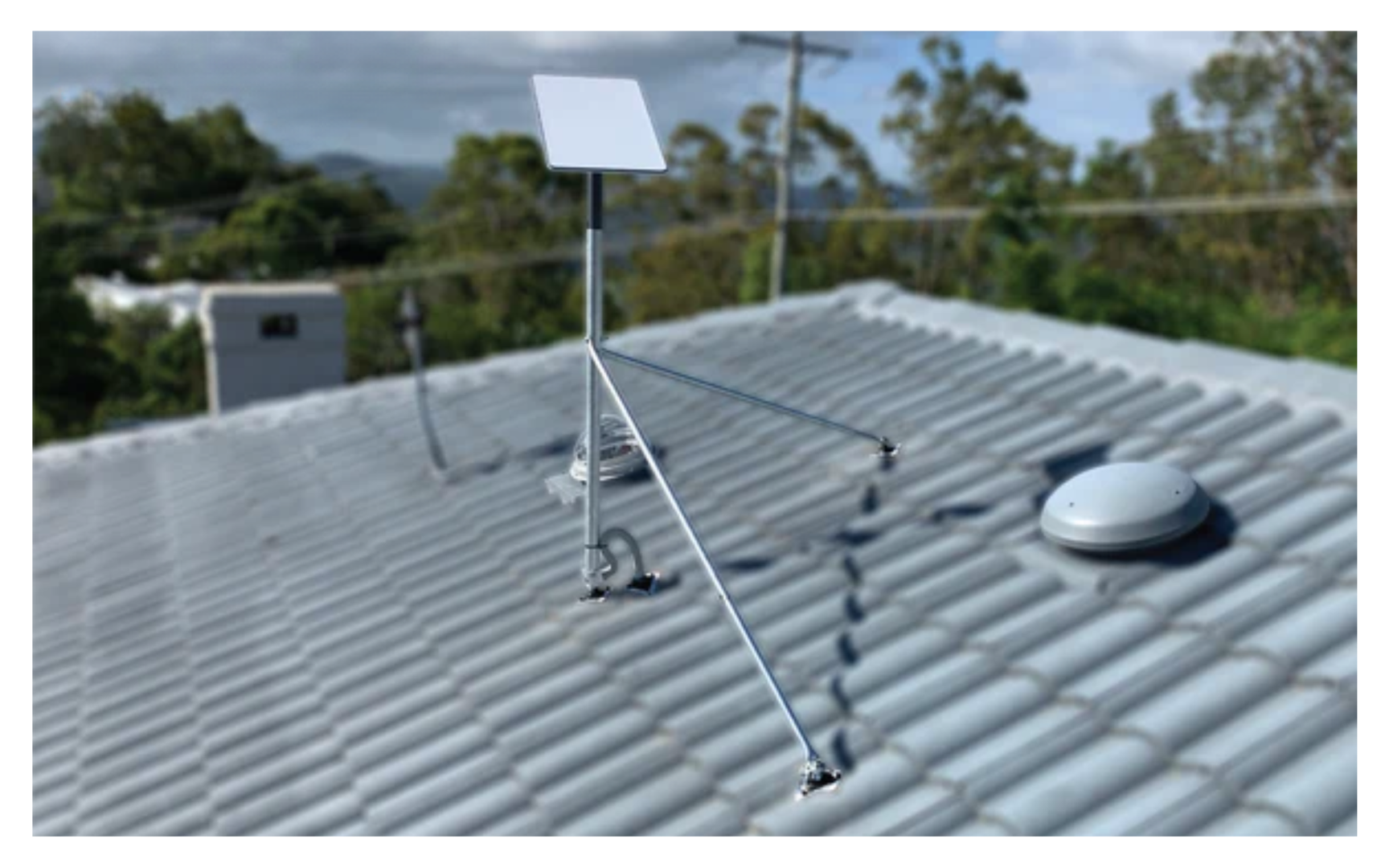
SpaceTek has also tested Starlink V5 with the StarPower V2 12V / 24V DC power solution for mobile installations. In our road testing, the V5 maintained Starlink connectivity well while travelling at road speed. That makes V5 especially interesting for New Zealand caravans, motorhomes, 4WDs, work vehicles and remote systems where a professional DC power and networking setup is preferred.
Important: SpaceTek’s in-motion observations are field-test results, not a claim that Starlink officially designates V5 as dedicated in-motion hardware. Your Starlink service plan, operating area, mounting, power system and Starlink’s current terms all matter.
Starlink V5 vs Mini vs Gen 3 / V4: side-by-side comparison
| Feature | Starlink Gen 3 / V4 Standard | Starlink V5 | Starlink Mini |
|---|---|---|---|
| Positioning | Previous Standard terminal | New compact Standard-class terminal | Ultra-portable all-in-one terminal |
| Dish size | 594 × 383 × 39.7 mm | 384 × 306 × 34 mm | 298.5 × 259 × 38.5 mm |
| Dish weight | 2.9 kg | 1.1 kg | 1.1 kg |
| Average power | 75–100 W | 35–50 W | 25–40 W |
| Field of view | 110° | 110° | 110° |
| Quoted peak hardware capability | 400+ Mbps | 375+ Mbps | 300+ Mbps class for current Roam marketing |
| Built-in Wi-Fi | No | No | Yes |
| Native DC input | No | No | Yes, 12–48 V |
| Best fit | Fixed Standard installs where power draw is less of a concern | Performance-focused fixed, mobile and off-grid installs using a separate router/network | Portable use where simplicity and built-in Wi-Fi matter most |
Why Starlink V5 matters for New Zealand mobile installations
New Zealand is a tough environment for satellite internet hardware. Caravan and 4WD installs need to handle corrugated roads, heat, dust, exposed roof mounting, long cable runs, battery limits and real-world obstruction issues. Remote sites and commercial vehicles also need reliable power and networking integration, not just a dish sitting on a table.

This is where Starlink V5 becomes interesting. It keeps a 110° field of view, drops the dish weight to the same published 1.1 kg as Mini, and reduces average power draw dramatically compared with Gen 3 / V4. For a permanent roof, canopy or fleet install, that combination can be more useful than Mini’s built-in Wi-Fi.
The biggest Starlink V5 advantage is lower power draw
For battery-backed Starlink installs, the power difference is significant. Using the midpoint of Starlink’s published power ranges:
| Terminal | Midpoint used | Estimated 12-hour use | Estimated 24-hour use |
|---|---|---|---|
| Starlink Mini | 32.5 W | 390 Wh | 780 Wh |
| Starlink V5 | 42.5 W | 510 Wh | 1.02 kWh |
| Starlink Gen 3 / V4 Standard | 87.5 W | 1.05 kWh | 2.10 kWh |
In a caravan, motorhome, canopy, boat or remote work vehicle, every watt affects battery sizing, solar recovery and how long you can stay online without running an engine or generator. V5 is not quite as low-power as Mini, but it is much closer to Mini than to Gen 3 / V4.
Starlink V5 vs Mini: why built-in Wi-Fi is not always better
The Starlink Mini is still the easiest portable option because the Wi-Fi router is built into the dish and the DC input is native. That is ideal for camping, quick setup, temporary sites and people who want the simplest possible Starlink kit.
But many mobile and off-grid customers already have a better network in place, such as a 4G/5G router, firewall, mesh Wi-Fi system, access points, Ethernet backbone, NVR, telemetry gateway or vehicle communications system. In those installs, Mini’s built-in Wi-Fi can be less important than terminal performance, clean DC power and integration with existing equipment.
That is the sweet spot for Starlink V5 in New Zealand: a compact Standard-class terminal for customers who want a more professional installation and are happy to use their own network equipment.
SpaceTek V5 + StarPower V2 mobile testing
SpaceTek has tested Starlink V5 with StarPower V2 in mobile installation conditions. The test setup focused on the type of install customers actually ask us for: DC power from a vehicle or battery system, Starlink powered without relying on the standard AC setup, and networking handled by the customer’s own router or equipment.
In our road testing, the V5 maintained connectivity well while the vehicle was moving. That does not remove the need to check Starlink plan rules, service availability or mounting safety, but it does give practical confidence that V5 is worth considering for mobile and semi-permanent installs where Mini feels too limited and Gen 3 / V4 feels too power-hungry.
Best uses for Starlink V5
- Caravan and motorhome roof installs where a permanent dish, DC power and a separate router are preferred.
- 4WD and touring setups where higher Starlink performance matters more than having Wi-Fi built into the dish.
- Commercial vehicles and fleets using Ethernet-first vehicle networks, telemetry, remote worker systems or existing routers.
- Emergency and event communications where compact size, modest power draw and high quoted capability are useful.
- Remote fixed sites where Gen 3 / V4 power draw is hard to justify but Mini is not the preferred networking model.
Where each Starlink model makes sense
Choose Starlink Mini if you want maximum portability
- You want Wi-Fi built into the terminal.
- You regularly pack the system away.
- You want the lowest possible power draw.
- You want native 12–48 V DC input without a separate power solution.
- You are happy with Mini-class performance for your use case.
Choose Starlink V5 if you want performance plus your own network
- You already have Wi-Fi, Ethernet, a router or a vehicle network.
- You want higher quoted peak capability than Mini.
- You are building a more permanent roof, canopy, caravan or work-vehicle install.
- You want a much lower-power alternative to Gen 3 / V4 Standard.
- You are considering a DC-powered setup with StarPower V2 and your own router.
Choose Starlink Gen 3 / V4 Standard if power is less critical
- You are doing a fixed home, shed or site install with plenty of AC power.
- You want Standard-class performance and already have compatible mounting hardware.
- You do not need the smaller V5 form factor or lower power draw.
Before choosing Starlink V5 for a moving vehicle
V5 looks promising for mobile-style installs, but a safe and reliable result still depends on the full system around the dish.
- Confirm your Starlink service plan permits the intended mobile or in-motion use in your operating area.
- Use a secure mount designed for vibration, wind exposure and safe cable routing.
- Size the DC power system for startup load, cable length, voltage drop and real-world operating margins.
- Use a suitable router or network setup if you are bypassing the original Starlink router.
- Treat SpaceTek field testing as practical evidence, not a guaranteed result for every location, plan, speed or installation.
FAQ: Starlink V5 New Zealand
Is Starlink V5 better than Starlink Mini?
Starlink V5 is not automatically better than Mini. Mini is better for simple portable use, built-in Wi-Fi and native DC input. V5 is better suited to customers who want a compact Standard-class terminal, stronger quoted capability and their own router or vehicle network.
Does Starlink V5 work with StarPower V2?
SpaceTek has tested Starlink V5 with StarPower V2 for mobile installation use cases. StarPower V2 is a 12V / 24V DC router-replacement power solution for selected Starlink systems, including compatible Starlink V5 setups. Customers should still confirm their full setup, router choice, cable requirements and Starlink plan rules before installing.
Is Starlink V5 suitable for caravans and 4WDs?
Starlink V5 is a strong candidate for caravans, motorhomes, 4WD touring and work vehicles where the customer wants a permanent or semi-permanent installation with DC power and separate networking. Mounting, cabling, power sizing and Starlink plan support still need to be checked.
Does Starlink V5 have built-in Wi-Fi?
No. Like the previous Standard Gen 3 / V4 terminal, Starlink V5 does not have Wi-Fi built into the dish. That can be an advantage for professional installs where the customer wants to use their own router, access points or Ethernet network.
How much power does Starlink V5 use?
The SpaceTek V5 mobile brochure lists Starlink V5 average power at 35–50 W. Real-world consumption can vary with conditions, cable length, power supply design and network activity, so DC systems should be sized with margin.
SpaceTek’s recommendation
For pure portability, Starlink Mini is still hard to beat. For permanent or semi-permanent vehicle installs where you already want your own router and a proper DC power system, Starlink V5 is now one of the most interesting Starlink terminals for New Zealand mobile, rural and off-grid users.
Compared with Gen 3 / V4, V5 brings the power draw down dramatically. Compared with Mini, it offers a stronger Standard-class hardware profile without forcing you into an integrated Wi-Fi terminal. That makes it a strong fit for caravans, motorhomes, 4WD touring, commercial vehicles, emergency communications, event systems and off-grid sites where the network is part of a larger setup.
You can view SpaceTek’s Starlink V5 mounts and accessories, or compare Starlink 12V power accessories if you are planning a DC-powered mobile installation.
Technical note: Figures in this article are based on the SpaceTek Starlink V5 mobile brochure and Starlink-published specifications referenced in that material. Starlink performance, plan support, hardware availability and mobility rules can change. Starlink is a division of SpaceX. SpaceTek is an independent solutions provider and does not claim endorsement by SpaceX.

Leave a comment
This site is protected by hCaptcha and the hCaptcha Privacy Policy and Terms of Service apply.