
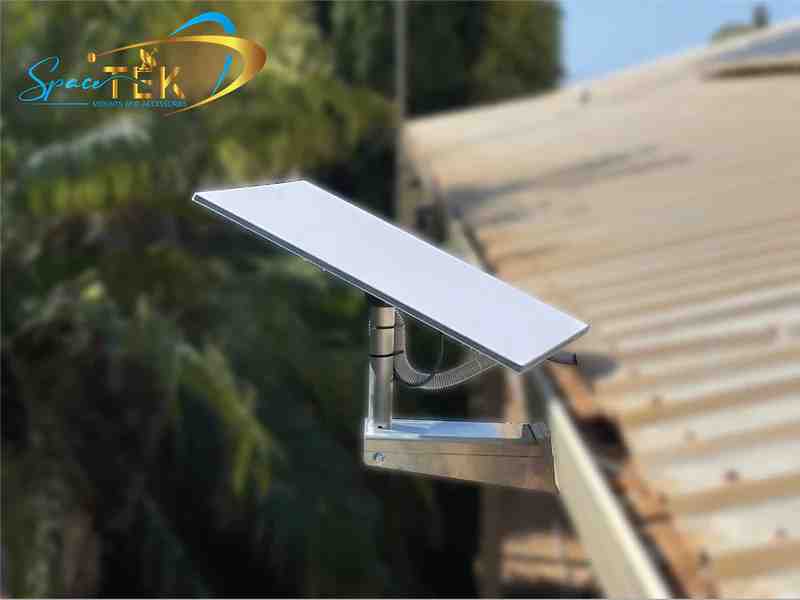
Why Your Starlink Mount Needs to Withstand a Cyclone
In Australia, standard mounting hardware often fails against our harsh weather. A Starlink dish ripped from a roof during a storm is a safety hazard and a connectivity blackout. This is why high duty mounts are not a luxury, but a necessity, especially in regions prone to tropical cyclones.
These are specialised mounting systems engineered to secure equipment in extreme conditions. They are defined by:
- High Load Capacity: Rated for 50+ kg and wind speeds over 120 km/h.
- Premium Materials: Marine-grade stainless steel and aircraft-grade aluminium to resist corrosion.
- Robust Design: Reinforced anchor points, vibration dampening, and UV-stabilised components.
As the founder of SpaceTek Australia, I've spent 25 years in satellite communications watching standard mounts rust, bend, and fail. I developed our range of high duty mounts because Australians need hardware that can handle local conditions, from coastal salt spray to the intense outback sun. A reliable connection depends on a mount that's built for the job.
What Defines High Duty Mounts and Why They're Essential
A high duty mount is engineered to survive extreme weather, not just hold a dish in place on a calm day. The difference is in the design, materials, and construction—the factors that determine if your Starlink is still on your roof after a storm.
Key Features of a Wind-Resistant Mount
When wind hits your Starlink dish, it creates immense force. At 120 km/h, that's around 90 kg of lateral force trying to rip the dish from its base. A high duty mount is built to handle this with features like:
- Genuine Load Capacity: Engineered for wind resistance over 120 km/h and loads of 50+ kg.
- Superior Materials: We use marine-grade stainless steel for coastal areas to prevent rust and aircraft-grade aluminium for a high strength-to-weight ratio, ideal for vehicles. Components like cable managers use UV-stabilised nylon that won't crack under the Australian sun.
- Environmental Resistance: Built to withstand UV radiation, salt spray, and extreme temperatures without degrading.
- Vibration Dampening: Critical for installations on vehicles or in high-wind areas, this feature prevents fasteners from loosening over time.
- Reinforced Anchor Points: Distributes stress evenly across the mounting surface to prevent pull-outs or structural damage.
We've engineered these features into our products to ensure they perform. You can learn more about the forces involved in our guide to rooftop wind resistance or explore SpaceTek's heavy-duty mount range.
Standard vs. High Duty: A Crucial Comparison
The difference between a standard mount and a high duty one becomes clear when conditions get tough. Standard mounts, which often use thinner metals and cheaper coatings, might seem cheaper initially, but they can rust, bend, or snap, leading to higher long-term costs from replacements, potential property damage, and connectivity outages. Even minor flexing in the wind can cause signal loss. A high duty mount provides the stability needed for a reliable connection and peace of mind. We've documented these issues to help you avoid common mount failures.

Securing Your Connection: Installation and Conclusion
Choosing the right high duty mount is the first step. Proper installation is what locks in the reliability, turning your Starlink into a lifeline that can weather any Australian storm.
Choosing the Right Mount for Your Australian Property
Every property is different, so your mounting solution needs to match. We've developed solutions for the diverse architecture across Australia.
- Roof Mounts: We offer specific designs for tile roofs that protect waterproofing, and clamps profiled to securely grip corrugated iron without causing damage.
- Vehicle Mounts: For RVs and caravans, our mounts are engineered to handle constant vibration and the jolts of corrugated roads, keeping your connection secure on the move.
- Wall Mounts: An excellent alternative when roof access is difficult, these mounts provide rock-solid stability when anchored correctly into studs or masonry.
See how our mounts perform in our field test on different roofs, or if you're on the road, explore our RV and Portability Mounts.
Compatibility with All Starlink Models
Our high duty mounts are designed to be compatible with every generation of Starlink hardware, ensuring a perfect fit.
- Starlink Mini: Our mounts maintain the Mini's portability while adding crucial security. Browse Starlink Mini compatible mounts.
- Starlink Gen 2 & Gen 3: The larger profile of these dishes requires robust mounting to handle wind load. We provide rock-solid solutions for both. See Gen 2 and Gen 3 mount solutions.
Best Practices for Installing High Duty Mounts
A great mount needs a great installation. Follow these key steps for maximum performance:
- Prepare the Surface: Ensure the mounting area is clean, dry, and structurally sound. Always locate rafters or purlins for roof installations.
- Use Correct Fasteners: We supply marine-grade stainless steel hardware to prevent rust. Tighten to the correct torque.
- Weather Seal All Penetrations: Use quality sealant to prevent water ingress and protect your property.
- Manage Cables: Protect the Starlink cable from UV damage and physical wear with protective conduits and ties.
For more detail, review the Australian standards for satellite mounts.
The Payoff: Reliability and Peace of Mind
Investing in a SpaceTek high duty mount means buying peace of mind. It's about protecting your investment, ensuring uninterrupted connectivity, and trusting that your setup is built to last.
Our mounts are engineered to handle everything from coastal salt spray to cyclonic winds. They are tough, tested, and trusted because they were designed for real Australian conditions.
Don't compromise on your connectivity. Get in touch for expert advice and let us help you find the perfect mounting solution for your Starlink system.

Leave a comment
This site is protected by hCaptcha and the hCaptcha Privacy Policy and Terms of Service apply.